
Be aware of your buckets and balloons! What makes you have a low mood and what picks you up!
This is part of knowing your SELF...............................



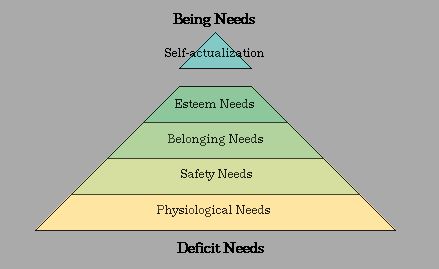 While shopping to equip our new office , we tried our best to buy only what was needed. It was not easy to distinguish between the two..how much time do you spend trying to decide between wants and needs...
How many times have you heard (or for that matter said yourself) "I absolutely need (fill in the blank)" when in reality the meaning was "I really want (fill in the blank)?" I can't live without those shoes...I will die if I can't have that ring...I simply have to have that car...the list can go on and on. Please don't get me wrong. These are phrases that we all use. That is why it's important to step back and remember that wants and needs are not the same.Here is a list. Take a few moments to jot down what is a need and what is a want.
- shoes
- designer suit
- water
- large apartment
- bed
- ice-cream
- car
- entertainment center
- club membership
- lunch
- concert tickets
- trip to Hawaii
- medicine
- necklace
- computer
- daily espresso
- cellular phone
- golf clubs
- furnishings
Unfortunately, the answers to these questions are not completely black and white. What may be a want for one person may be a necessity for another person. For example, let's take a look at a computer. If you make your livelihood on the computer, then a computer is a necessity for you. If you only use a computer to play the latest online games, then it isn't. Knowing this, we can still make some pretty good guesses as to what are wants and what are needs from the above list for most people. Shoes (and clothing in general), water, bed, car, lunch, medicine and furnishings are good bets to be needs. Now that doesn't mean that the latest model, 4 wheel drive sport utility vehicle with all the extras counts as a need for most people, but basic transportation to make a living does.
A large apartment, computer and cellular phone may or may not qualify as a need depending on your particular circumstances while a designer suit, ice-cream, entertainment center, club membership, concert tickets, trip to Hawaii, necklace, daily espresso and golf clubs all probably fall into the want section.
If you can take the time to start being honest with yourself, you will find that a lot of the things which you assumed were an absolute necessity until now are in reality nothing more than wants. Once you distinguish between the two and look at these issues objectively, you have placed yourself in the position to live within your means by simply asking yourself whether or not an item or service you are about to purchase is a need or merely a want.
Copyright (c) 2004, by jeffrey strain


 This is my grand daughter . She crawls now. Her favourite toy is a handphone. She already chewed her Mum's handphone until it no longer works, she has also destroyed Mamu Aiman's headset by sucking on it. My handphone has to be reformated after she had a go at it..and as you can see , she loves to be behind the wheels.

-George Bernard Shaw
The Father who did not listen
I was watching an old P Ramlee movie. It was Nasib Si Labu Labi. In one scene , Labu and Labi had gone to see the father of a lady their boss wanted to marry. The short little man was a very pleasant man who was a great talker. He asked them what they were there for and before they could answer he had gone on to speak of other things and everytime Labu wanted to say something, he would interupt and say something else. Finally, Labi caught hold of the gentleman's head and shut the man's mouth with his hand and then Labu was finally able to tell him their mission!
I had thought this could not actually happen in real life until I met a certain Dato. My husband and myself had gone to see him about something and it was the first time we had met him. We probably know more about him , his wife and his job than he knows about us. Perhaps he has even forgotten what we came to see him for . He asked me three times what I did and I told him but he was not listening .He also could not pronounce my name eventhough I told him several times. It reminded me of Daren's father in law in Bewitched since he never got Daren's name right ever!
I suppose such extremes of not listening are not common but then again have we really been listening ?Trainers, counsellors , doctors teachers and parents are very fond of telling people what to do and how to do it. It is a paradigm that most of us probably lived with, that those in authority do all the talking and those who are not , do all the listening.
Listening coaches
People pay a coach to listen to them !Does a coach then have the listening skills to really listen ? What does the coach do with all the listening anyway? Is it enough just to be listened to?
In my opinion, deep listening does more to move a client than anything else combined! In fact without the deep listening, none of the other skills of a coach will be effective enough! You would think such a thing as listening would be as simple as allowing the ear to hear what people are saying but the truth is , it is not so simple !
Seek to understand
When I say something, I may not mean what you think I mean . It is therefore important to clarify what is being said . So many problems result from misunderstandings! Last weekend I got on a taxi at the Wangsa Maju LRT station and told him I want to go to Taman Melawati. In my usual dreamy manner I did not pay attention to his driving and soon found myself in Taman Melati!Whoa! The taxi driver certainly did not seek to understand and was pretty sure he brought me to where I wanted to go! Many of us are like this. We assume we know what the person talking to us meant to say and based on that assumption we act.
One way I seek to understand is by repeating what the person said . I might say something like," Let me get this clear. You said this......Is this what you mean?" How many people you know actually do this? When we argue for instance we just want to drown out the other person's argument by speaking louder than him or her!
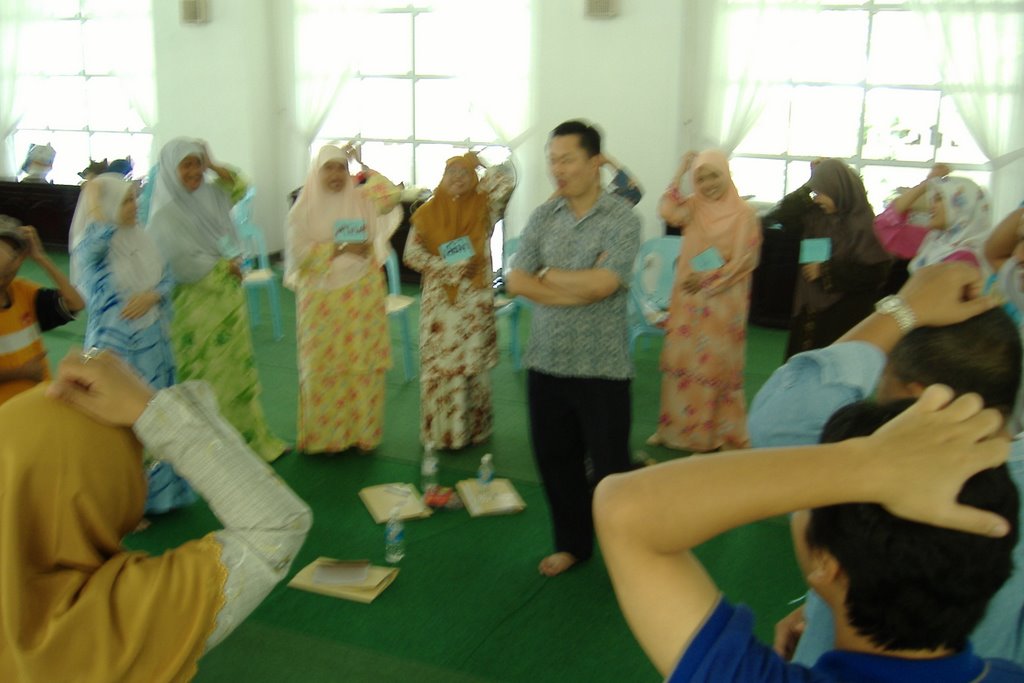
One of the activities I am fond of when I do group coaching is to pair people up and get them to listen to each other . They have to spend about five minutes just listening and are only allowed to ask questions to clarify . They could not give their opinions and even when they disagreed with what was being said ,they were told to just listen and seek clarification. Before the activity started I asked each partner to make an affirmation. The listener's affirmation is: I will listen deeply and seek to understand what my partner is saying. I will throw the light of awareness and be a mirror for my partner so they can see what they are saying. As for the talker their affimation is: I will tell my partner the truth from the depth of my heart. I will be as honest as I possibly can and as direct and clear as I can in telling my partner what I want heard. The topic is usually something that the person wants some clarity on.
The results of this activity is usually extremely interesting and for me it is thought provoking . The majority of talkers feel good. They feel listened to and many actually got some insight into what they talked on even for the short duration of five minutes. There was once a fellow who whispered to me after the activity that he got annoyed with the listener echoing everything he said , so one must not over do it in trying to build a rapport. Listeners on the other hand usually feel happy listening because they feel good being of help to their talking partner Once in a while however , I get a disgruntled listener! One lady said she was upset because she had to listen and therefore could not talk. Another said they got upset because they could not interject with their objections.
Body language
In the situation I mentioned above, the lady who did not like to listen folded her arms as she talked when it was her turn to talk. I had taken note of this as I went around observing the actions and body language of the activities couples. When it was time to make comments , she remarked that she liked being listened to eventhough she felt the listener was forced to listen and was not sincere in listening. I also noted when it was her turn to listen, she kept her arm folded eventhough her partner had her arms open and oustretched in front of her as if trying her best to reach out to her listener. To no avail! Up to the end of the session this listener held back and had her arms folded and admitted to not really enjoying being a listener! In the other listening couples at the same workshop I noted there was a lot of mirroring of each other. The listeners leant forward a little , head cocked to one side and their arm and legs sometimes matched the talker . I had not instructed them to do this but the action was pretty spontaneous. When the person is listening, it is not just the ears, the eyes, the body and the heart listens as well.
Our filters.
This lady I alluded to previously is a treasure of examples! When she said she knew the listener was not really interested and was just listening out of politeness , she was applying a filter . It was she herself who listened in this manner and with this filter she saw others. One time when I was driving a car in the afternoon , I put on my sunglasses. It was a long drive on the highway and about an hour later it started to rain. I turned on the headlamps and wondered why it was so dark until I realised I had my sunglasses on. That is what happens when we listen through our filters. We have assumptions that are based on who we are and how we feel about things. This is why I have said self awareness in an important component in listening. It is self awareness that allows us to notice our filter and step aside and not react.
Levels of listening
All these qualities can be consciously developed through knowledge practice and increased understanding. Do you have what it takes?
Some patients have a compulsive need to trigger such reactions to reinforceIt is the energy of the other person that we feel . I once caught myself becoming very angry only to realise that it was the key to the remedy the patient needed. The patient was a baby with cereberal palsy who almost never stopped crying . He was already 6 months old when the parents brought him to see me.Soon after he and his parents walked into my room I started becoming angry. He was screaming at the top of his voice and the parents told me this was his usual manner except when he is feeding or sleeping.I took the baby from his mum and gave him to his dad , instructing him to take the baby out to the waiting room and do a zikr,Ya Salam all the time. I then did a breathing exercise with the mum , we can try it now . After the breathing exercise, I got a history from the mum. She had become extremely angry when a doctor remarked to a nurse who was trying to teach her to suckle the baby at the breast while she was warded with the baby when they were investigating his cereberal palsy. He had remarked to the nurse that she was wasting her time because the baby was brain damaged and could not suckle. The mother became very angry but did not say anything . She did manage to breastfeed the baby after this but never stopped being angry up to the moment she was with me.A this point there was a palpable silence because the baby had miraculously stopped crying.
their rejection pattern.
| From coping | To directing | To thriving |
| Time management | Information management | Life management |
| Dependence on the clock | Wise use of the compass | Intuitive guidance |
| Doing things right | Doing the right things | Being your true self |
| Lack of self discipline | Personal willpower | Divine will |
| Learn to say ‘no’ | Learn to say ‘yes’ | Unlearn, trust intuition, be spontaneous |
| Managing minutes | Managing months | Surrendering to the moment |
| Busy-ness | Business | Full participation in life |
| No time | Free self time | Freedom |
| Efficiency | Effectiveness | Appropriateness |
| Out of control | In control | Trusting, letting go |
| Dominance of ‘work’ | Balanced living | Freedom |
| Consciously incompetent | Consciously competent | Unconsciously competent |
| Reactive, habitual, instinctual | Proactive, imaginative, intellectual | Intuitive |
| A focus on doing | A focus on being and doing | A focus on being and serving |
| Doing what’s urgent | Doing what’s important | Doing what meets the need |


The Physical Environment
Preorganizing
Creating a Vacuum
A vacuum means some extra space in drawers, bookcases, filing cabinets, and closets. People stop filing when files become jam-packed. Then a pile begins to grow on your desk and before you know it you are buried in stacks of papers.
Vacuum-creating Rules :
Start at the End, not at the Beginning
Start with the oldest stuff and work towards the most recent stuff on your desk. Be sure to go through the closet that is scariest to open, first. The last place to clear is your desk.
Closet
Take everything out, and identify stuff by category as you go.
Label boxes . Keep those extra office supplies on a more convenient shelf, or use a box labeled “scratch paper”. Decide whether to toss, recycle or keep. If you must keep, put it in its proper category and labeled box. The least used items must be kept out of sight. Create as much empty space as you can.
Bookcase(s)
Empty the bookshelf, identifying categories again as you go. Decide whether to trash or recycle items. Keep only the current phone directory and reference books.
Filing cabinet(s )
If you have a filing system where you are able to find things, don’t change it. Avoid using A-Z filing systems because if you do not remember the name of the file you will have a difficult time looking for it. Use a more general system.
Create Drawer Categories. Have major categories. You can have “Clients”, “Projects”, “Reference Material”, “Contracts”, for instance. Never use the category “Miscellaneous”.
Create larger categories within each drawer.
The rule of thumb is if a file does not have more than 20 pieces of paper in it, then the title is too specific. In “household” you can have a category “car stuff” which holds the insurance, repairs, registration and anything to do with the car. The most recent paper goes in front.
Don’t ask “How should I file this?” but “How will I use this?”
The receipts for bills we pay can be filed in 12 folders, one for each month from January to December. When you have paid the bill, whether it be for the phone, your credit card or gas, just drop the receipt in the month you paid for.
Color code
Clients can be red. Administration can be blue. Finances may be green. Just use colored markers to highlight the labels in color so you don’t have to go out and buy a dozen colored folders.
Don’t be surprised at the amount of trash you are generating as you follow this process.
Computer files
Computer files and paper systems are handled in the same manner. Use the folders in your computer as you would your physical filing cabinet.
As you create new files, save them according to your new system. Trash old files as you go. Label a folder as Archive, Clients, Household, and within each folder there should be more folders.
Boxes under/around the desk .
Again, 95% of the stuff under your desk is trash.
Desk drawers . Dump out the entire drawer then place the items you deem worthy back into the appropriate drawer. Remember to group like items.
Having a “personal” drawer is a big help. This is where the purse, hairbrush, and candy go.
Now take a look around your office and feel the freedom from distractions gently come upon you. You must be feeling lighter already. Celebrate your newfound feeling of physical and emotional lightness!
Step 1: The Cockpit Office
Setting up
Be back in a second
That second actually takes us 20 minutes on average before we get back to our desks to work.
In a regular office, you interrupt yourself by “getting a cup of coffee, going to the restroom, or having a cigarette”. If you have a home office, you have even more time-wasting opportunities. “Water the plant, put in another load of laundry, walk the dog”
You may also forget why you stood up to go get something, (scissors, a letterhead, a stamp) in the first place. This is why we need to have all our essential tools within easy reach to avoid self-interruptions. The trick is you do not have to leave your chair to go get it.
Office Layout
In a study done to identify the most productive office environment the following four components were noted:
The most effective desk configuration is a U. At the bottom of the U, place your computer. One side of the U is for project work or tasks that take about one hour or so to complete. The other side of the U is for those crisis/interruptions that take minutes to complete such as faxing a letter, filling up a form or opening the mail. If you cannot have a U configuration, an L is the second-best layout, with the computer at the junction of the two arms. The third best layout is two parallel desks. The least efficient layout is a straight line.
Open desk space
Keep mementos to a minimum. You need room to work. This is the reason we head for the kitchen or dining table when it is cleared after a meal so we can do our projects at home.
Interruptions versus Concentration
Suggestions to improve productivity:
Four “must-haves” for every Cockpit
The desktop file contains current files used daily. These are projects your are working on at the moment, clients you are currently working with, references used daily, and repetitive tasks performed daily like fax and email. Current projects/clients, Frequently repeated tasks, directories you use everyday, and blank fax cover sheets should be in your desktop file.
The desktop file at home: (place near a huge trash can)
Categories
The In Box
Everything new goes into the In Box. There are two In Box rules:
Don’t forget the virtual inbox such as email, faxes, voice mail, cell phone messages, etc. also other items where you place newly received information like your purse, bag or the front passenger seat of your car.
Whether you are a morning person or a night person, the time to attack the In Box is when you are sharpest and most alert. Make it a routine time each day.
The To-Read Box
We seldom get around to reading everything we put aside to read. How do you purge? Take everything out of your To-Read box, select the three to five most important materials to read and put them back in the box, and throw the rest in the trash.
The higher a stack of In Box files and To Read files, the more guilt is piled on your self day after day. If you have more than three inches of files in these boxes, you will be overwhelmed by a stack of guilt you simply cannot bear to look at.
The To-File box
How often do you file? As soon as your To-File box becomes full.
The Rest of the Tools in your Cockpit
If the stuff is not needed, throw it away. If it merits a category, file it there. If you have an answer to How Will I Use This? Then file it in the place it will most likely be used.
Note: Crumpled pieces of paper take up more space in a trashcan than flat pieces of paper.
One thing you need to learn to throw away: pens that don’t write anymore. We have a bad habit of sticking these pens back in the pencil holder.
Keep a fresh supply on hand so you can add categories as needed.
The most efficient system of keeping business cards and contact information is the 360-degree Rolodex. This way you can’t keep piling things on top like with a flat Rolodex. Just file the cards alphabetically, and if you don’t have 20 minutes to sort out your business cards, ask a friend or even a child to help you out.
If your system catches a virus, electronic Rolodexes can be very risky. Paper is faster even if it is bulky. Always have a paper backup to your computerized mailing list, so it can be retyped when necessary.
Keep the most recent phone books, white pages, and yellow pages on a shelf near the phone. Keep the most recent copy of your organizational directory within easy reach as well.
In the age of e-mail we find it more meaningful whenever we receive handwritten note cards that congratulate us or thank us. So keep a nice little file of your personal handwritten notes to look at when you’re feeling down, and also a nice supply of blank ones to write on and send out to people whose day you would like to brighten up. Your email message can be easily deleted, but a warm thank-you note will be kept for a longer time.
If you do all your own mailing, this is an essential timesaver. You won’t have to waste time standing in line at the post office.
Customizing your Cockpit
If you keep borrowing an item, buy one of your own. If you keep getting up to get something to finish the job, bring it back to the cockpit and keep it there. If you always lose your scissors, buy more than one pair.
Stuff you may need in your cockpit:
| You Are an Old Soul |
 You are an experienced soul who appreciates tradition. Mellow and wise, you like to be with others but also to be alone. Down to earth, you are sensible and impatient. A creature of habit, it takes you a while to warm up to new people. You hate injustice, and you're very protective of family and friends A bit demanding, you expect proper behavior from others. Extremely independent you don't mind living or being alone. But when you find love, you tend to want marriage right away. Souls you are most compatible with: Warrior Soul and Visionary Soul |
| Your Quirk Factor: 54% |
 You're a pretty quirky person, but you're just normal enough to hide it. Congratulations - you've fooled other people into thinking you're just like them! |